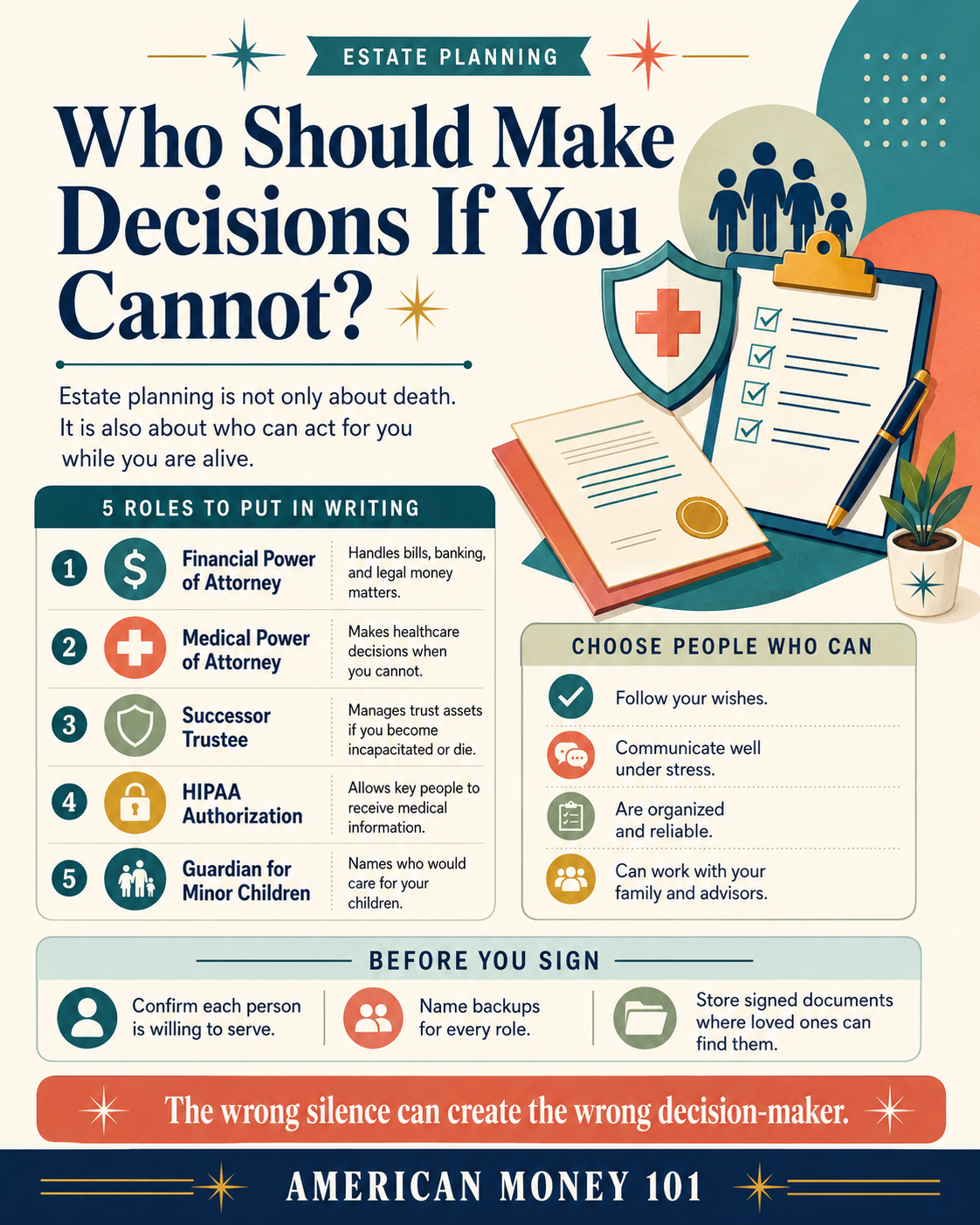
When you hear the phrase "estate planning," you probably think about what happens to your money and property after you pass away. But estate planning is not only about death. It is also about who can act for you while you are alive. If an accident or illness leaves you unable to manage your own affairs, someone else will have to step in. The question is: Will it be someone you chose, or someone a judge picked for you?
If you don't put your wishes in writing, your family might have to go to court to get the authority to pay your bills or make medical decisions on your behalf. That process can be slow, expensive, and stressful. To protect yourself and your family, there are five key roles you need to assign in your estate planning documents.
1. Financial Power of Attorney
A financial power of attorney is a legal document that gives someone else the authority to handle your money. The person you name is called your "agent." If you are in the hospital or otherwise incapacitated, your agent handles bills, banking, and legal money matters.
For example, your agent can sign checks, pay your mortgage, file your taxes, and manage your investments. You can make this power "durable," meaning it stays in effect even if you lose mental capacity. Because this role comes with a lot of power, it is critical to choose someone who is scrupulously honest and organized.
2. Medical Power of Attorney
While a financial power of attorney handles your wallet, a medical power of attorney (sometimes called a healthcare proxy) handles your body. This person makes healthcare decisions when you cannot communicate your own wishes.
Your medical agent can talk to your doctors, consent to treatments, and make decisions about long-term care or end-of-life measures. You should discuss your values and medical preferences with this person ahead of time so they know exactly what kind of care you would want.
3. Successor Trustee
If you have set up a revocable living trust to hold your house, bank accounts, or other assets, you are likely the primary trustee. But what happens if you get sick? A successor trustee manages trust assets if you become incapacitated or die.
Unlike a power of attorney, which ends when you pass away, a successor trustee can continue managing the trust after your death, paying your final bills and distributing the assets to your beneficiaries according to the rules you set up in the trust document.
4. HIPAA Authorization
The Health Insurance Portability and Accountability Act (HIPAA) protects your medical privacy. Doctors and hospitals are legally prohibited from sharing your medical information with unauthorized people. A HIPAA authorization allows key people to receive medical information.
You might want your adult children or siblings to be able to call the hospital and get updates on your condition, even if they aren't the ones making the actual medical decisions. A HIPAA release makes that possible.
5. Guardian for Minor Children
If you have kids under the age of 18, this might be the most important decision of all. Naming a guardian dictates who would care for your children if you and their other parent are unable to do so.
If you don't name a guardian in your will, a court will decide who raises your kids. The judge won't know your family dynamics, your parenting philosophy, or who your children feel most comfortable with. Putting this in writing ensures your children are raised by the people you trust most.
How to Choose the Right People
You don't have to name the same person for all of these roles. The person who is great at managing spreadsheets might be the perfect financial power of attorney, while the person who is calm in a hospital setting might be the best medical proxy. When selecting your decision-makers, choose people who can:
- Follow your wishes: They need to do what you would want, even if they personally disagree.
- Communicate well under stress: Medical emergencies and financial crises require a cool head.
- Are organized and reliable: They will need to keep track of paperwork, deadlines, and bills.
- Can work with your family and advisors: They should be able to collaborate with your doctors, lawyers, and relatives without causing unnecessary drama.
Before You Sign
Drafting the documents is only half the battle. Before you finalize your estate plan, take these three steps:
- Confirm each person is willing to serve: Never surprise someone with a legal responsibility. Ask them first, explain what the job entails, and make sure they are comfortable taking it on.
- Name backups for every role: Life happens. Your first choice might move away, get sick, or pass away before you do. Always name at least one alternate for every position.
- Store signed documents where loved ones can find them: A power of attorney does no good if it's locked in a safe nobody knows the combination to. Tell your agents where the original documents are kept and consider giving them copies.
The wrong silence can create the wrong decision-maker. Take the time to put your choices in writing so that if the unexpected happens, you and your family are protected.