Taking on a second job or side hustle is a major commitment of your time and energy. You are trading your evenings, weekends, or early mornings for extra cash. But where should that second paycheck go first? If you don't have a clear plan, that hard-earned money can easily vanish into everyday expenses, leaving you exhausted and no further ahead.
The Golden Rule: Keep It Separate
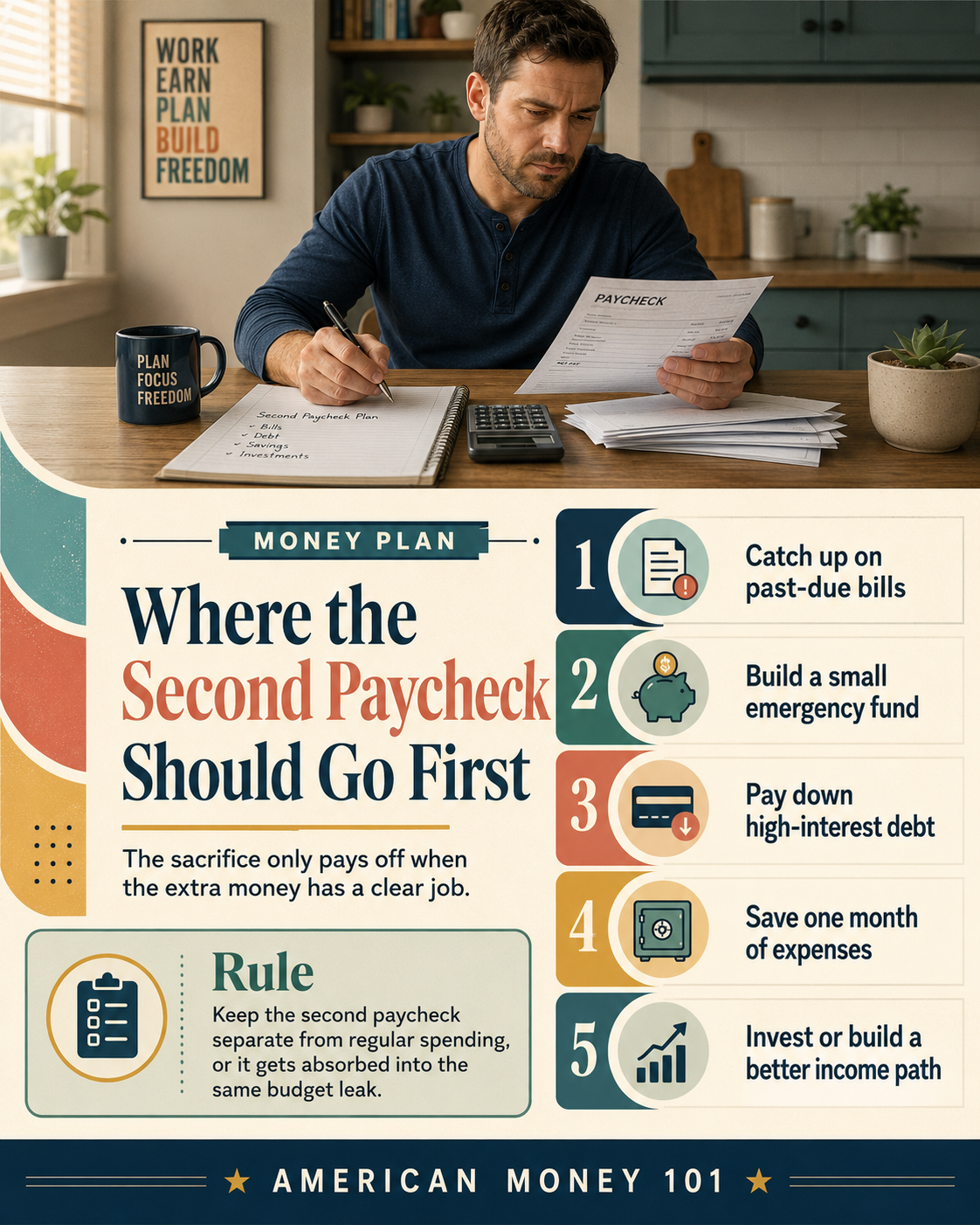
The most important rule for managing a second income is to keep it separate from your regular spending. If you deposit your side hustle earnings into the same checking account you use for groceries and gas, it will likely get absorbed into the same budget leaks that made you need a second job in the first place. Open a separate account for this money. This creates a psychological barrier and forces you to be intentional about how you use it.
Step 1: Catch Up on Past-Due Bills
Before you can start building wealth or even saving for a rainy day, you have to stop the bleeding. If you have past-due bills, late fees are piling up, and your credit score is taking a hit. Your very first priority for that second paycheck is to get current on your obligations. This includes:
- Utility bills facing shut-off notices
- Overdue rent or mortgage payments
- Minimum payments on credit cards that are behind
Getting current stops the immediate financial threats and gives you a stable foundation to work from.
Step 2: Build a Small Emergency Fund
Once your bills are current, you need a buffer. If your car breaks down or you have an unexpected medical expense, you don't want to be forced to rely on credit cards, which will just put you back in the hole. Use your second paycheck to build a small, starter emergency fund. For many people, $500 to $1,000 is a good initial target. This isn't meant to replace your income if you lose your job; it's just to cover minor emergencies so you don't derail your progress.
Step 3: Pay Down High-Interest Debt
With a small safety net in place, it's time to attack the debt that is costing you the most money. High-interest debt, like credit card balances or payday loans, acts like a financial anchor. The longer you carry it, the more you pay in interest. Using the debt avalanche method, focus your extra income on the debt with the highest interest rate while continuing to make minimum payments on everything else. Once that debt is gone, roll the money you were paying on it into the debt with the next highest rate.
Step 4: Save One Month of Expenses
After the high-interest debt is cleared, you can breathe a little easier. Now, go back to your emergency fund and beef it up. Aim to save enough to cover one full month of your essential living expenses. This provides a much more robust safety net. If you were to lose your primary job, you would have a 30-day runway to figure things out without panicking. This level of savings brings significant peace of mind.
Step 5: Invest or Build a Better Income Path
If you have reached this step, congratulations! You have stabilized your finances, eliminated toxic debt, and built a solid safety net. Now, your second paycheck can be used to build your future. You have a few options here:
- Invest: You can start putting that extra money into a retirement account like an IRA or a brokerage account to build long-term wealth.
- Build a better income path: You might use the money to pay for a certification, take a class, or buy equipment that will allow you to get a better-paying primary job or turn your side hustle into a full-time, profitable business.
The ultimate goal of a second job shouldn't be to work two jobs forever. It should be a temporary sacrifice that acts as a bridge to a more secure and prosperous financial future.