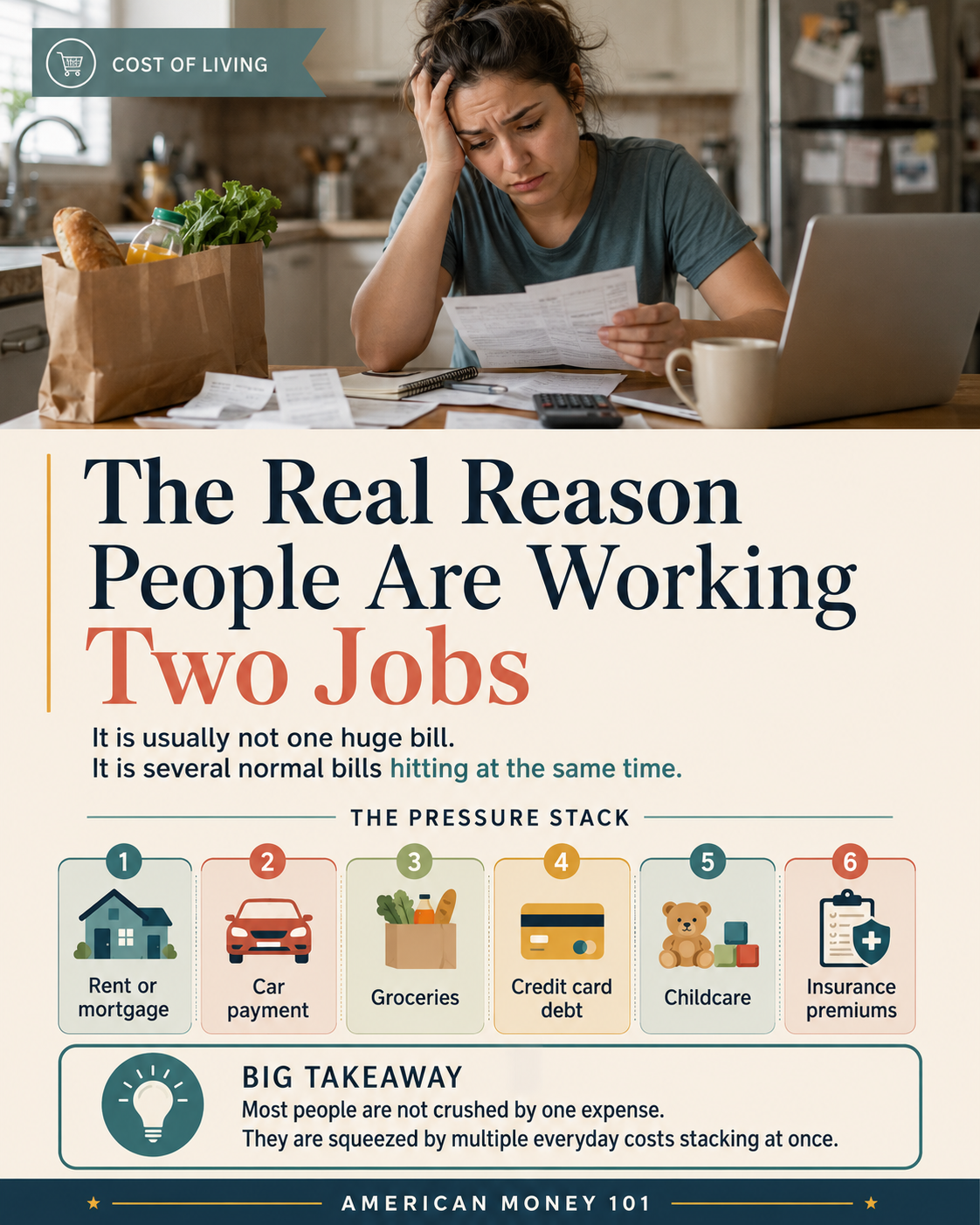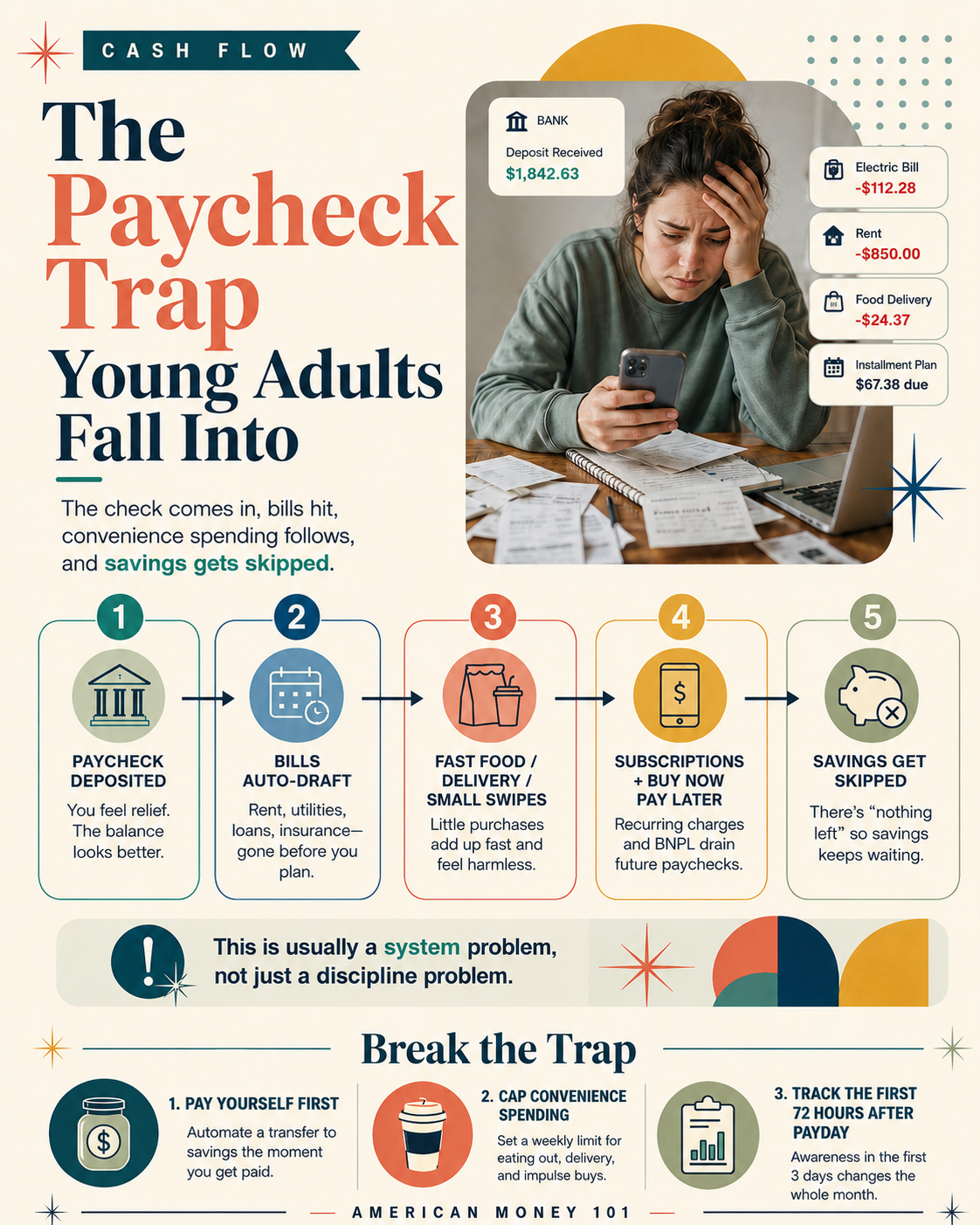
You check your bank account on payday, and the balance looks great. But check it again 48 hours later, and you might wonder where all that money went. For many young adults, fixed costs and everyday spending eat most of the paycheck almost immediately. The problem is often not one giant purchase—it is several normal bills hitting at once.
The Example Paycheck Breakdown
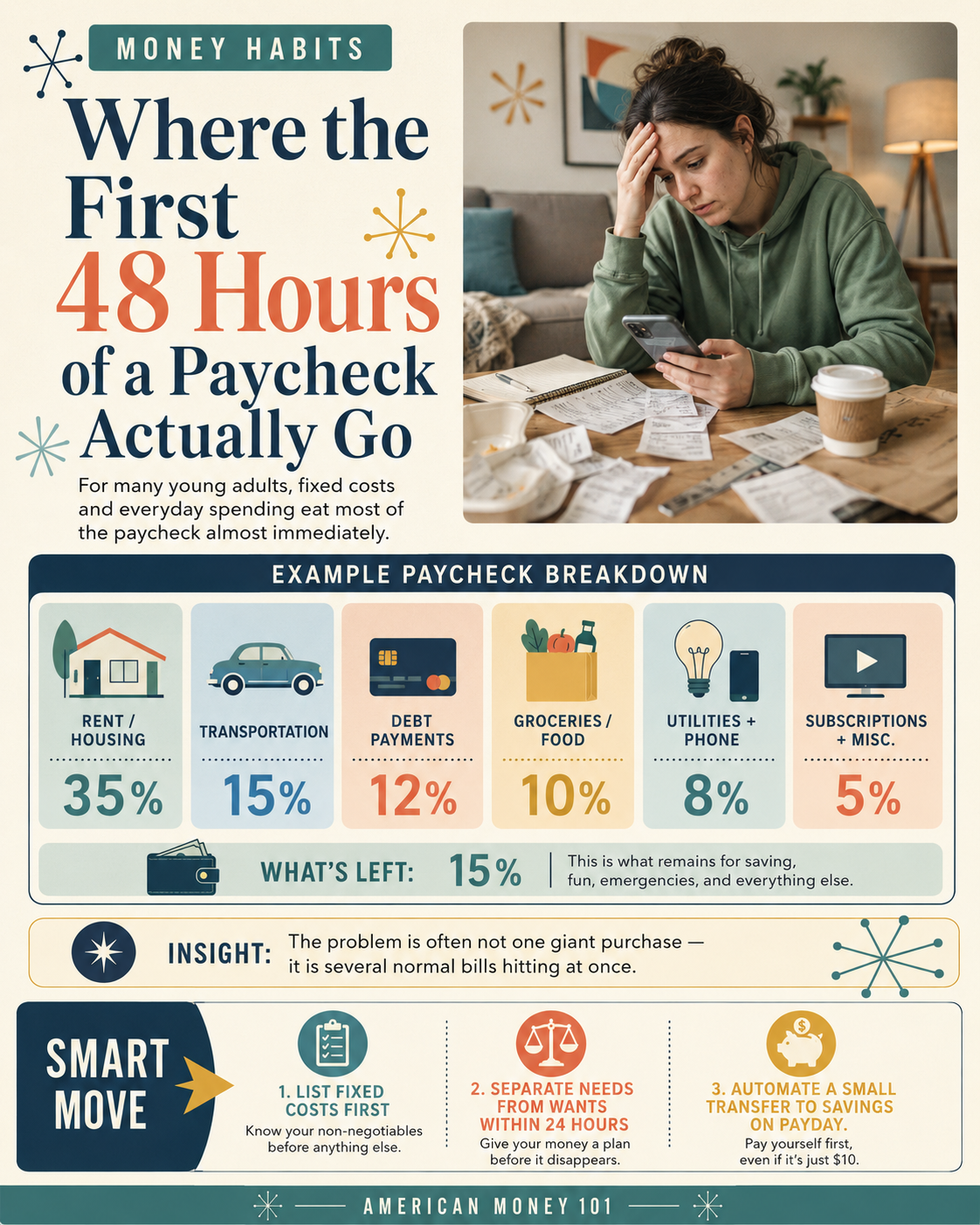
When you look at an example paycheck breakdown, it becomes clear why money disappears so quickly. Here is how a typical paycheck might be divided:
- Rent / Housing: 35%
- Transportation: 15%
- Debt Payments: 12%
- Groceries / Food: 10%
- Utilities + Phone: 8%
- Subscriptions + Misc.: 5%
When you add up these essential and recurring expenses, they account for 85% of your income. That leaves just 15% for saving, fun, emergencies, and everything else. Housing is typically the biggest expense for the average American household, and keeping a roof over your head costs a lot of money. Transportation and debt payments also take significant bites out of your take-home pay.
Why the First 48 Hours Matter
The first 48 hours after you get paid are critical because that is when most of your automated payments and essential bills are processed. Rent, car payments, student loans, and utility bills often hit your account right after payday. This rapid depletion of funds can leave you feeling like you are living paycheck to paycheck, even if you make a decent income. It is not necessarily that you are overspending on luxury items; it is that the cost of living—the non-negotiables—takes up the lion's share of your money.
Smart Moves to Take Control
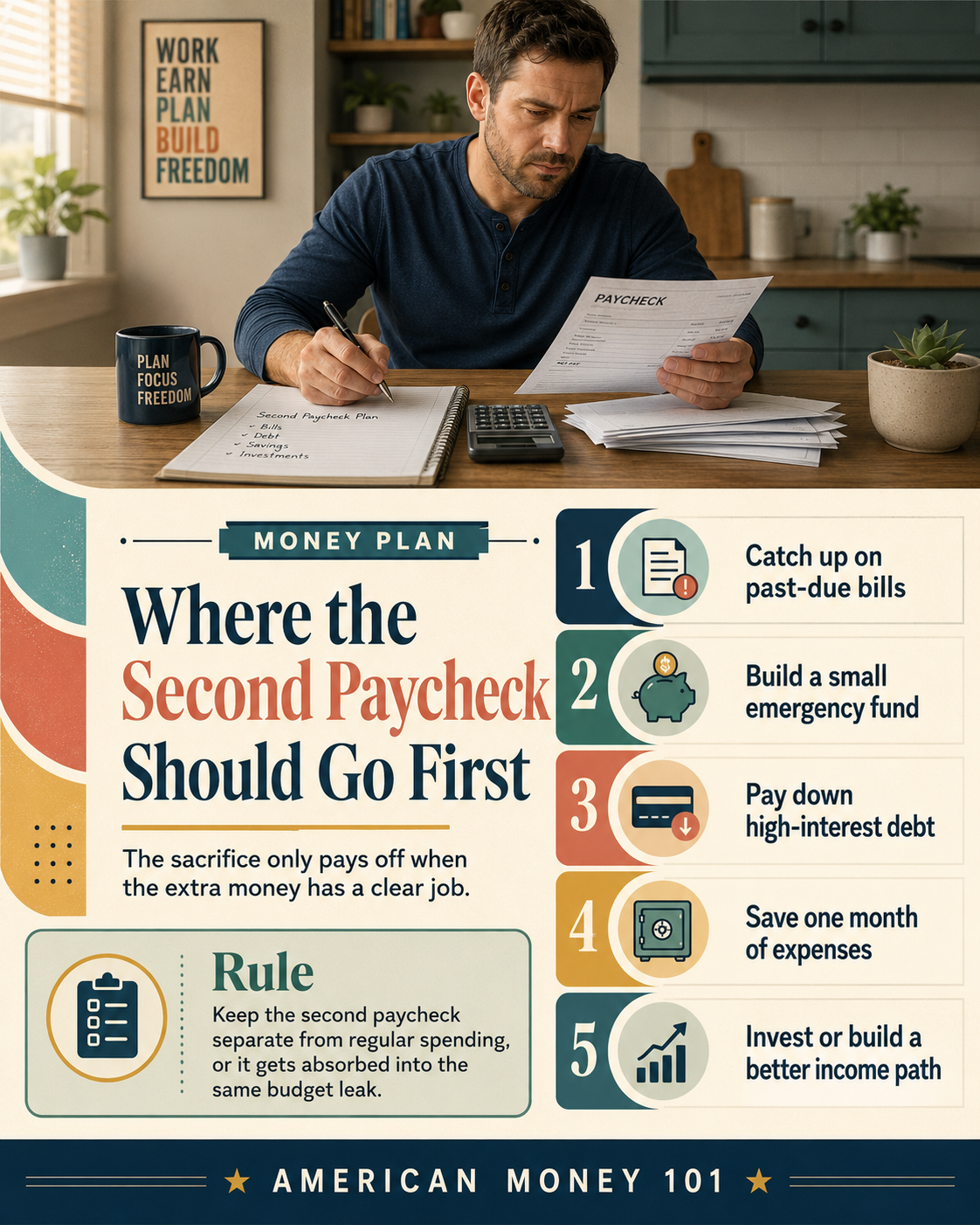
To stop wondering where your money went and start giving it a purpose, you need a plan. Here are three smart moves to help you manage your paycheck better:
- List Fixed Costs First: Know your non-negotiables before anything else. Write down every fixed expense you have, from rent to insurance to minimum debt payments. This gives you a clear picture of exactly how much money you absolutely must spend each month.
- Separate Needs from Wants Within 24 Hours: Give your money a plan before it disappears. Once your fixed costs are covered, look at what is left. Decide how much you need for variable essentials like groceries and gas, and how much you can afford to spend on wants like dining out or entertainment.
- Automate a Small Transfer to Savings on Payday: Pay yourself first, even if it is just $10. Setting up an automatic transfer from your checking account to your savings account on the day you get paid ensures that you are building your savings before you have a chance to spend the money.
Building a Better Budget
Creating a budget is the best way to track your spending and ensure you have enough money for both your needs and your goals. A budget is simply a written plan for how you will spend and save your income each month. Start by estimating your monthly take-home pay, then list all your expenses. If your expenses exceed your income, you will need to find ways to cut back on non-essentials or increase your income.
Many financial experts recommend the 50/30/20 rule as a starting point. This guideline suggests allocating 50% of your take-home pay to needs, 30% to wants, and 20% to savings and debt repayment. While this might not be realistic for everyone right away, especially if housing costs are high in your area, it provides a target to work toward. The key is to be intentional with your money and make sure you are prioritizing your financial well-being.