Getting a driver's license is a major milestone for any teenager, bringing a newfound sense of freedom and independence. But for parents, that excitement is often accompanied by a sense of dread when thinking about the financial implications. The license itself might be cheap, but the car attached to it can quickly become a major household expense. If you're wondering exactly how much a teen driver will impact your budget, you're not alone.
Breaking Down the Monthly Costs
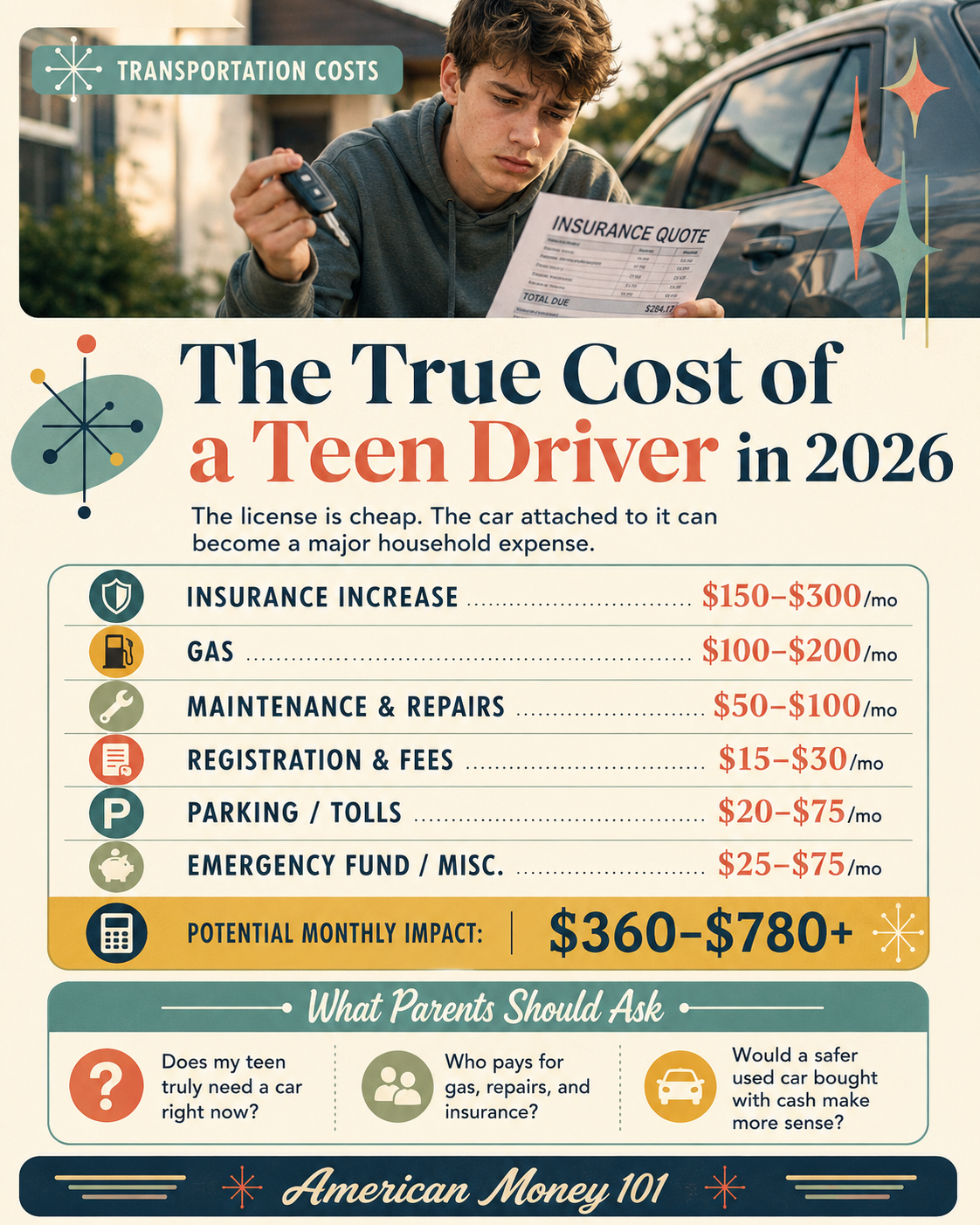
The financial reality of a teen driver goes far beyond just buying a car. The ongoing monthly expenses can easily strain a family budget if you aren't prepared. Based on current estimates, adding a teen driver can increase your monthly expenses by anywhere from $360 to over $780. Here is a breakdown of where that money goes:
- Insurance Increase: $150–$300/mo
- Gas: $100–$200/mo
- Maintenance & Repairs: $50–$100/mo
- Registration & Fees: $15–$30/mo
- Parking / Tolls: $20–$75/mo
- Emergency Fund / Misc.: $25–$75/mo
The Insurance Shock
The biggest hit to your wallet will almost certainly be auto insurance. Teenagers are statistically higher-risk drivers, and insurance companies price their premiums accordingly. Adding a 16-year-old to a parent's policy can cause rates to jump significantly. While it's generally much cheaper to add a teen to an existing family policy rather than buying them a standalone policy, you should still expect a substantial increase.
To help mitigate these costs, be sure to ask your insurance agent about available discounts. Many carriers offer reductions for teens who maintain a B average or higher (the "good student" discount) or who have completed an approved driver's education course. You might also consider raising your deductible, though you'll need to weigh the lower monthly premium against the higher out-of-pocket cost if an accident occurs.
Fueling Up and Keeping It Running
Gas is another major expense that can fluctuate wildly depending on how much your teen drives and the fuel efficiency of the vehicle. Setting a mileage cap or discussing how often the car can be used for non-essential trips can help keep fuel costs in check.
Maintenance and repairs are also inevitable. Oil changes, new tires, and unexpected breakdowns all cost money. Encouraging your teen to learn basic car maintenance, like checking tire pressure and fluid levels, can help prevent larger, more expensive issues down the road. It's also wise to build a small emergency fund specifically for car-related surprises.
Questions Parents Should Ask
Before your teen gets behind the wheel, it's important to have a frank discussion about expectations and responsibilities. Consider these key questions:
- Does my teen truly need a car right now? Sometimes waiting a year or two can make a big difference in insurance rates and maturity levels.
- Who pays for gas, repairs, and insurance? Will your teen contribute through a part-time job, or will the parents cover everything? Sharing the costs is a great way to teach financial responsibility.
- Would a safer used car bought with cash make more sense? A reliable, older vehicle is often cheaper to insure and repair than a newer model.
Turning Expenses into Lessons
While the costs are undeniable, having a teen driver is also an excellent opportunity to teach real-world financial literacy. By involving them in the budgeting process, discussing insurance rates, and requiring them to contribute to the expenses, you are helping them build money management skills that will serve them well long after they leave the nest.