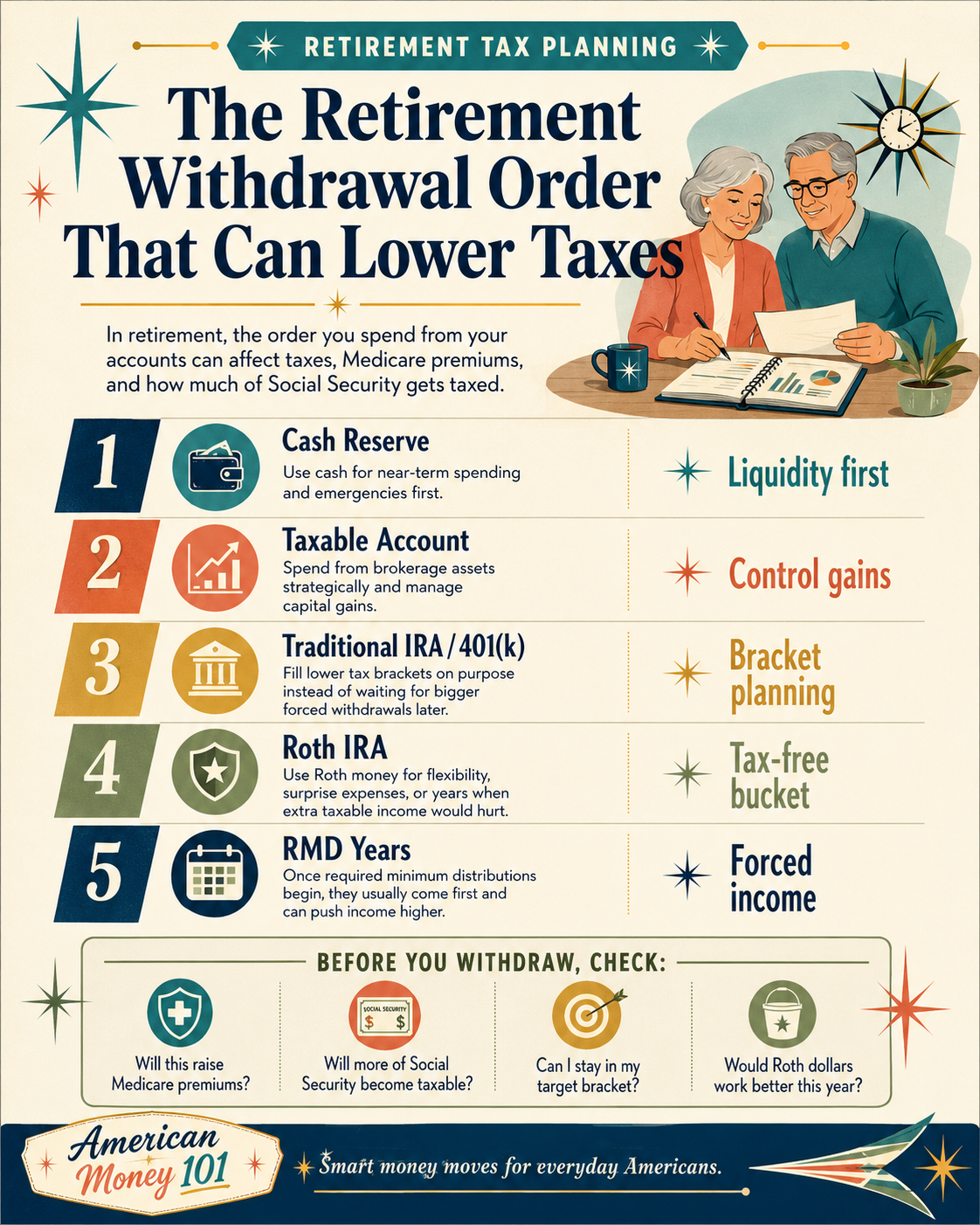
After decades of saving for retirement, the day finally arrives when you need to start spending that money. But how do you decide which account to tap first? The order in which you withdraw funds from your various accounts can significantly affect your taxes, your Medicare premiums, and even how much of your Social Security benefits are subject to taxation. Having a strategic withdrawal plan can help you keep more of your hard-earned money and make your savings last longer.
1. Cash Reserve: Liquidity First
When you need money for near-term spending and emergencies, your cash reserve should be your first stop. This includes money in checking accounts, high-yield savings accounts, and short-term certificates of deposit (CDs). Using cash first provides liquidity without triggering new taxes, as you have already paid taxes on this money (though you do pay taxes on the interest it earns). Keeping a solid cash buffer helps you avoid selling investments during a market downturn just to cover your daily living expenses.
2. Taxable Accounts: Control Gains
Once your cash needs are met, the next place to look is your taxable brokerage accounts. When you sell investments in these accounts, you only pay taxes on the capital gains—the profit you made above your original investment. If you have held the investments for more than a year, those gains are taxed at long-term capital gains rates, which are generally lower than ordinary income tax rates. By spending from these accounts strategically, you can manage your capital gains and keep your overall tax bill lower.
3. Traditional IRA / 401(k): Bracket Planning
Next in line are your tax-deferred accounts, such as traditional IRAs and 401(k)s. You haven't paid taxes on this money yet, so every dollar you withdraw is taxed as ordinary income. A smart strategy here is "bracket planning." This means withdrawing just enough from these accounts to fill up your current, lower tax brackets. Doing this on purpose during your early retirement years can help you avoid being pushed into a much higher tax bracket later when you are forced to take larger withdrawals.
4. Roth IRA: Tax-Free Bucket
Your Roth IRA is your tax-free bucket. Because you contributed to this account with after-tax dollars, qualified withdrawals are completely tax-free. This makes Roth money incredibly valuable for flexibility. You can use it to cover surprise expenses, large purchases, or to supplement your income in years when taking more money from your traditional IRA would push you into a higher tax bracket or trigger higher Medicare premiums.
5. RMD Years: Forced Income
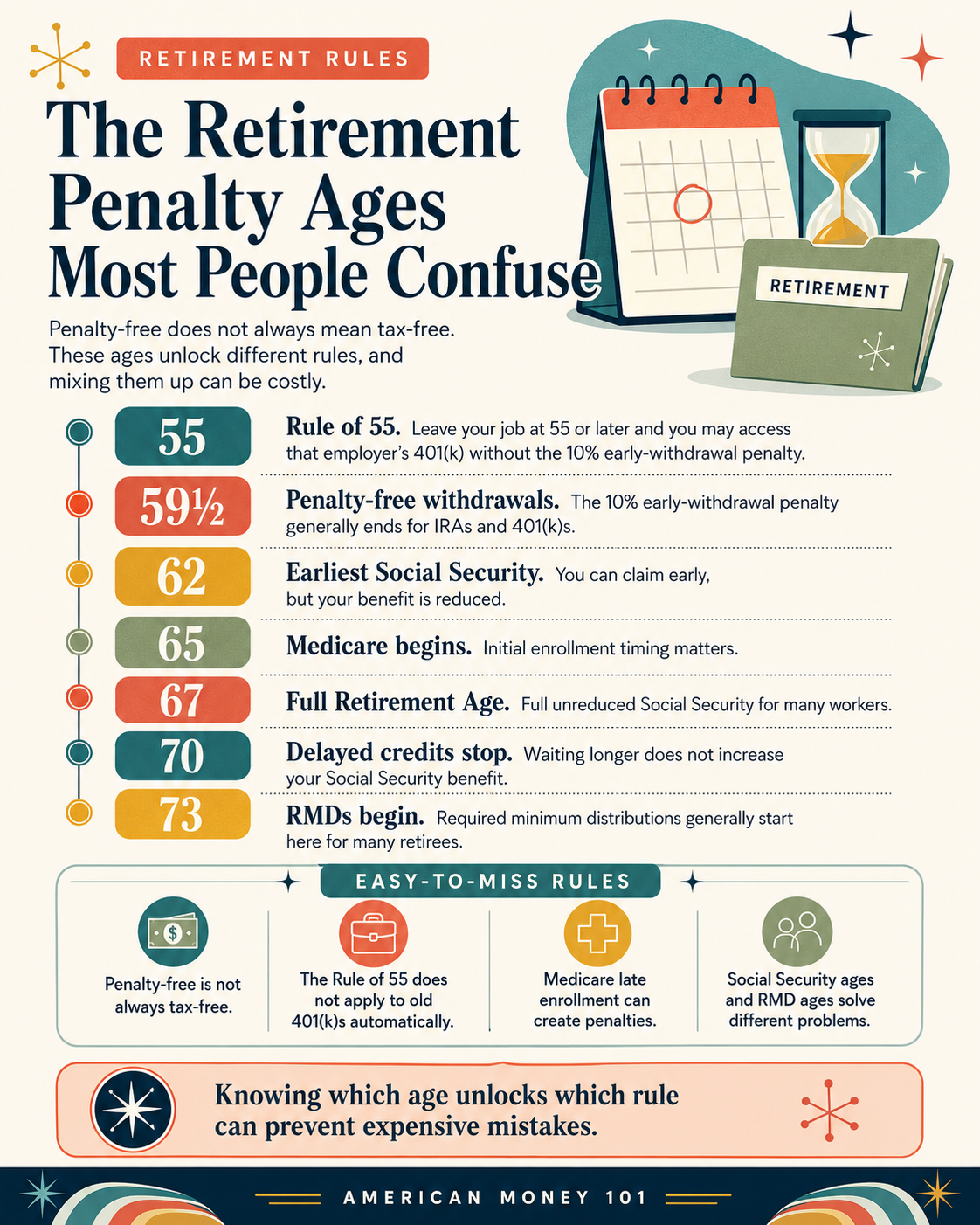
Eventually, the government requires you to start taking money out of your tax-deferred accounts. These are called Required Minimum Distributions (RMDs). Currently, RMDs begin at age 73. Once RMDs start, they usually become your first source of retirement income for the year because you face a steep penalty if you don't take them. Because RMDs are taxed as ordinary income, they can push your overall income higher, which is why planning your withdrawals in your earlier retirement years is so important.
Before You Withdraw, Check:
Before making any significant withdrawals, it is crucial to ask yourself a few key questions to avoid unintended financial consequences:
- Will this raise Medicare premiums? Medicare Part B and Part D premiums are tied to your income. A large withdrawal from a traditional IRA could trigger an Income-Related Monthly Adjustment Amount (IRMAA), increasing your healthcare costs.
- Will more of Social Security become taxable? Up to 85% of your Social Security benefits can be taxed depending on your "combined income." Withdrawals from tax-deferred accounts increase this combined income.
- Can I stay in my target bracket? Carefully monitor how much you are withdrawing from taxable sources to avoid bumping into a higher marginal tax bracket.
- Would Roth dollars work better this year? If you need extra cash but are nearing the top of your current tax bracket, tapping your Roth IRA might be the smarter move to keep your taxable income in check.