Deciding when to start taking Social Security is one of the biggest financial choices you will make as you approach retirement. The exact question you need to answer is: How does your claiming age affect your monthly check and your overall financial security? The age you choose to claim directly impacts the size of your benefit for the rest of your life. Let's break down the three major milestones—age 62, 67, and 70—to help you understand what changes at each stage.
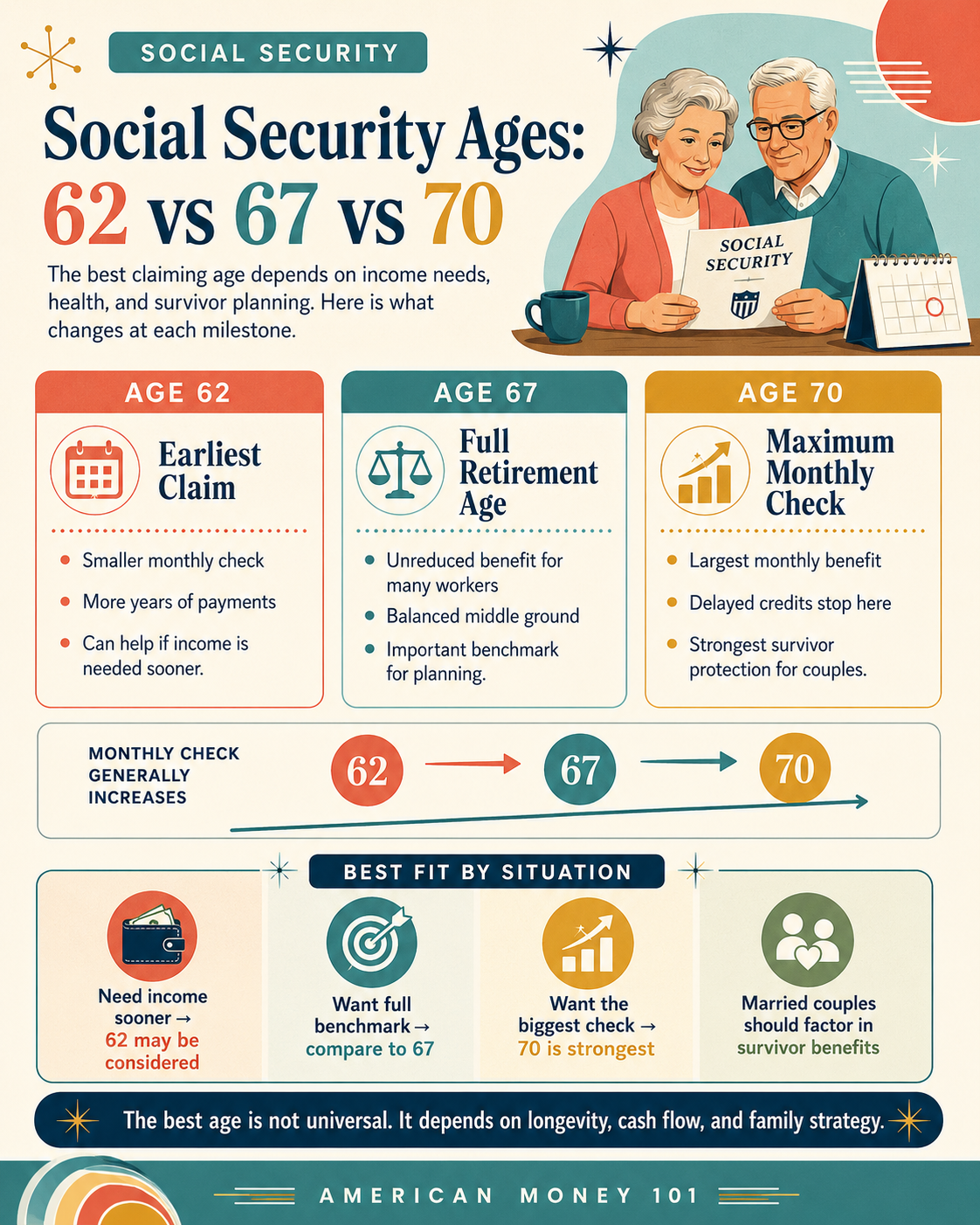
Age 62: The Earliest Claim
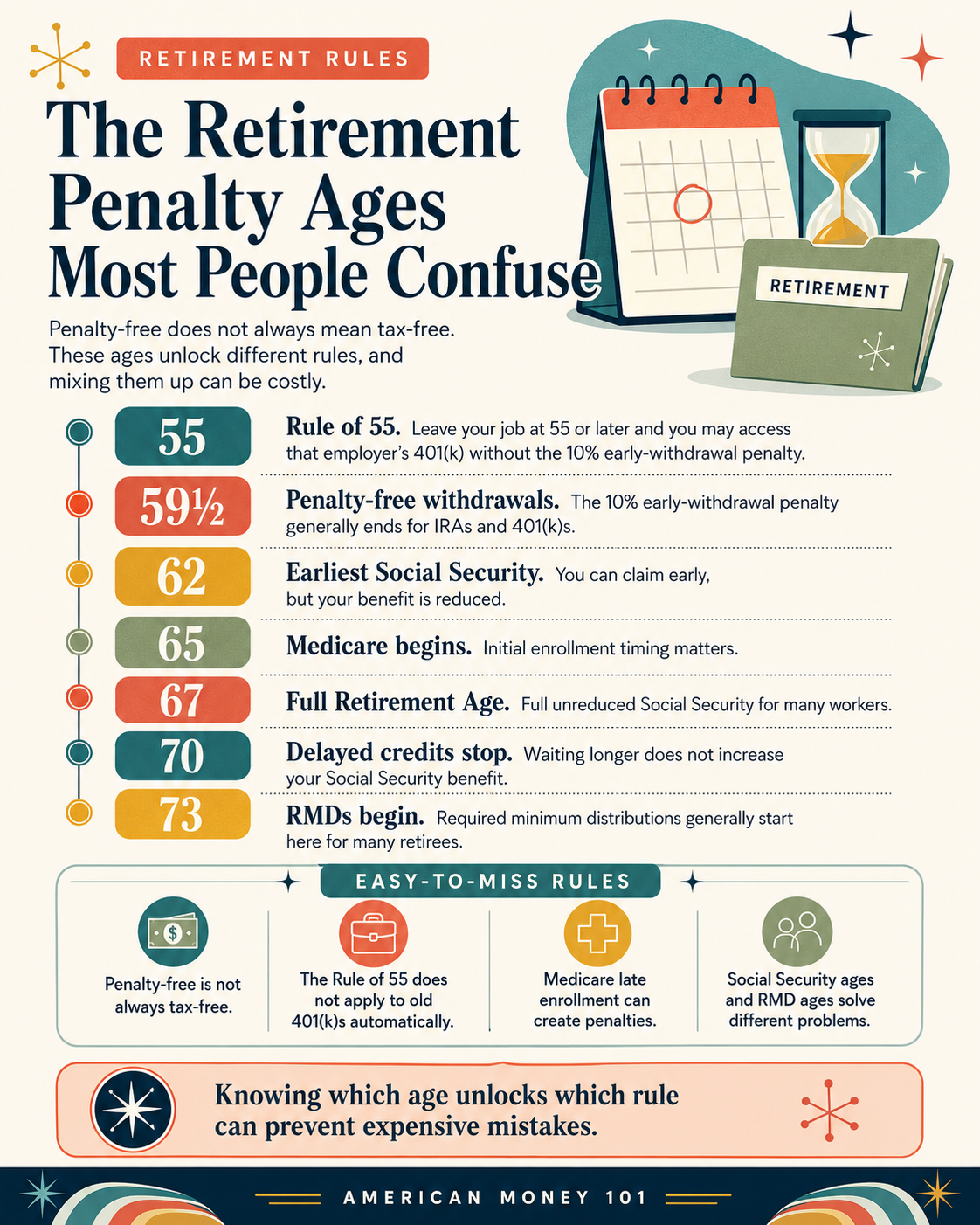
Age 62 is the absolute earliest you can start collecting your Social Security retirement benefits. While getting money sooner sounds appealing, it comes with a significant trade-off. If you claim at 62, your monthly check will be permanently reduced compared to what you would receive if you waited.
- Smaller monthly check: Because you are claiming early, your benefit is reduced by up to 30% compared to your full retirement amount.
- More years of payments: You will receive checks for a longer period of time, which can be beneficial if you have a shorter life expectancy.
- Can help if income is needed sooner: If you are forced to stop working due to health issues or job loss, claiming at 62 provides immediate cash flow.
Claiming at 62 might be considered if you need the income right away or if you have health concerns that make a long retirement unlikely. However, you must be prepared for that smaller check to be locked in for life.
Age 67: Full Retirement Age
For anyone born in 1960 or later, age 67 is considered your Full Retirement Age (FRA). This is the magic number where the Social Security Administration considers you eligible for 100% of the benefit you have earned based on your lifetime earnings.
- Unreduced benefit for many workers: Claiming at your FRA means you get your standard, baseline benefit without any early claiming penalties.
- Balanced middle ground: It offers a solid compromise between getting money reasonably early and avoiding the steep reductions of claiming at 62.
- Important benchmark for planning: Even if you don't claim exactly at 67, knowing your FRA is crucial because all other benefit calculations are based on this number.
If you want your full benchmark amount, compare your options to age 67. It is the standard against which early reductions and delayed increases are measured.
Age 70: Maximum Monthly Check
If you can afford to wait, delaying your claim past your Full Retirement Age pays off. For every month you wait past your FRA, you earn delayed retirement credits. These credits increase your benefit by 8% per year, up until you reach age 70.
- Largest monthly benefit: By waiting until 70, your monthly check will be as large as it can possibly get—up to 24% more than your FRA amount.
- Delayed credits stop here: There is no financial incentive to wait past age 70. Your benefit maxes out at this point.
- Strongest survivor protection for couples: If you are the higher earner in a marriage, maximizing your benefit also maximizes the survivor benefit your spouse will receive if you pass away first.
If you want the biggest check possible, 70 is the strongest option. It provides excellent longevity insurance, ensuring a higher income stream if you live well into your 80s or 90s.
Best Fit By Situation
The best age to claim is not universal. It depends entirely on your personal circumstances, including your longevity, cash flow, and family strategy. Here is a quick way to think about it:
- Need income sooner: 62 may be considered if you have no other options or have health issues.
- Want full benchmark: Compare your plans to 67, the standard Full Retirement Age for most workers today.
- Want the biggest check: 70 is strongest, offering the maximum monthly payout.
- Married couples: You should factor in survivor benefits. The higher earner delaying their claim is often a smart strategy to protect the surviving spouse.
Ultimately, your monthly check generally increases the longer you wait between 62 and 70. Take the time to evaluate your savings, your health, and your family's needs before making this permanent decision.