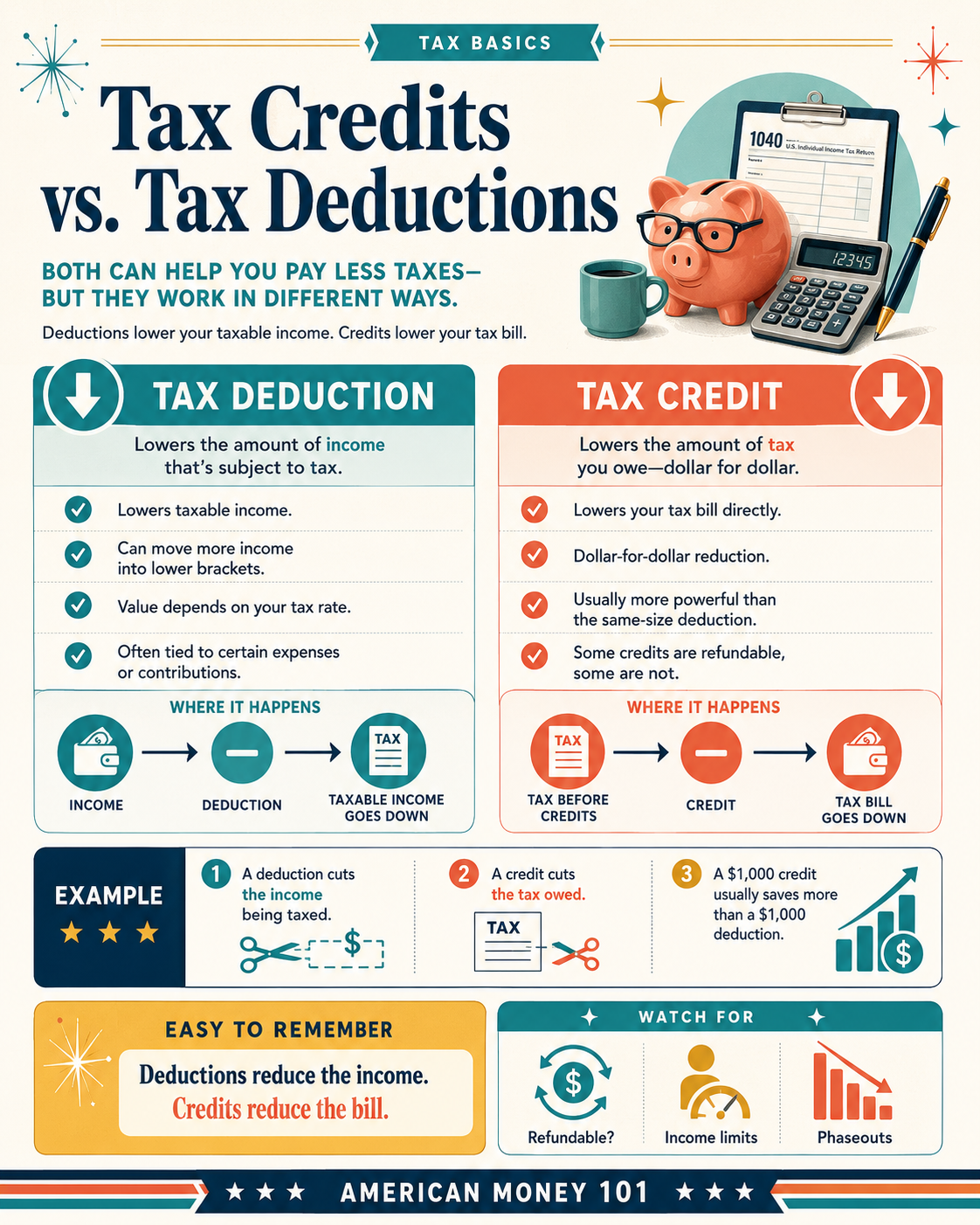
When tax season rolls around, you face a major decision that directly impacts how much you owe the IRS or how big your refund will be. The question is simple: Should you take the standard deduction or itemize your deductions? Both methods are designed to lower your taxable income, but they work in very different ways. Understanding how each option stacks up is the key to making sure you don't pay more taxes than you have to.
What Is the Standard Deduction?
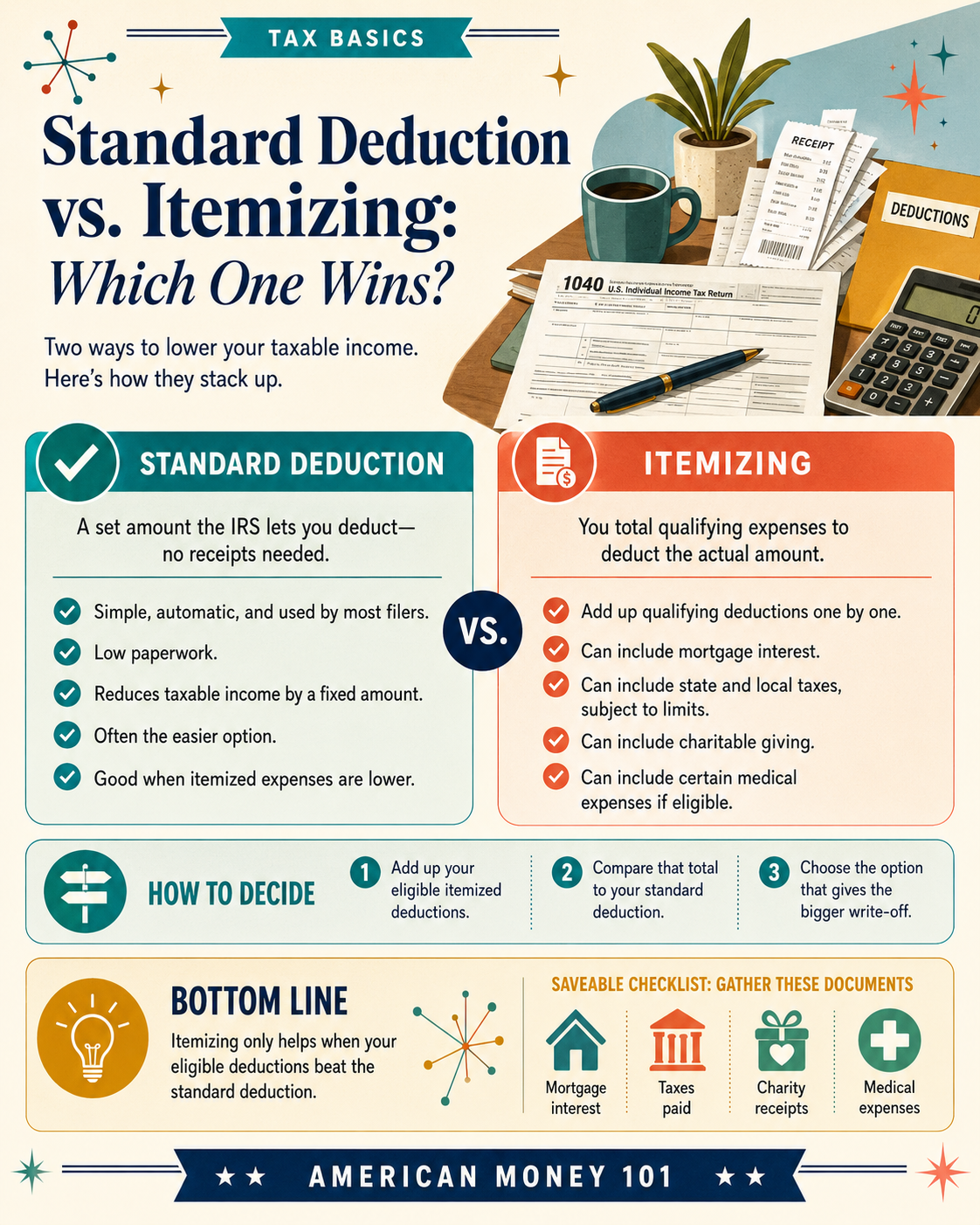
The standard deduction is a set dollar amount that the IRS allows you to subtract from your income before your tax is calculated. Think of it as a free pass to reduce your taxable income without having to prove your expenses. The exact amount you get depends on your filing status (such as single, married filing jointly, or head of household), your age, and whether you are blind. The IRS adjusts these amounts annually for inflation.
For most everyday Americans, the standard deduction is the go-to choice. It is simple, automatic, and requires very low paperwork. You do not need to keep a shoebox full of receipts or track every dollar you spent throughout the year. It simply reduces your taxable income by a fixed amount. This option is generally the best choice when your total eligible itemized expenses are lower than the standard deduction amount for your filing status.
What Does It Mean to Itemize?
Itemizing is the alternative to the standard deduction. Instead of taking a flat amount, you total up your actual qualifying expenses for the year. If the sum of these specific expenses is greater than your standard deduction, itemizing will save you more money. However, it requires much more record-keeping, as you must have the documentation to back up your claims.
When you itemize, you add up qualifying deductions one by one on Schedule A of your tax return. The IRS has strict rules about what counts. Common itemized deductions include:
- Mortgage interest: You can generally deduct the interest you pay on the loan used to buy, build, or substantially improve your primary or secondary home.
- State and local taxes (SALT): You can deduct certain taxes you paid to state and local governments, including property taxes and either state income taxes or state sales taxes. This deduction is currently subject to a $10,000 limit ($5,000 if married filing separately).
- Charitable giving: Donations made to qualified tax-exempt organizations can be deducted. You must have receipts or bank records to prove your gifts.
- Medical and dental expenses: You can deduct out-of-pocket medical expenses, but only the portion that exceeds a certain percentage of your adjusted gross income (AGI).
How to Decide Which Option Wins
The goal is always to choose the option that gives you the biggest write-off, which in turn results in the lowest tax bill. You are not locked into one method forever; you can evaluate your situation each year and pick the one that works best for that specific tax return. Here is a simple three-step process to help you decide:
- Step 1: Add up your eligible itemized deductions. Gather your records for the year, including mortgage interest statements (Form 1098), property tax bills, receipts for charitable donations, and significant medical bills. Total them up according to IRS rules.
- Step 2: Compare that total to your standard deduction. Look up the standard deduction amount for your specific filing status for the current tax year.
- Step 3: Choose the option that gives the bigger write-off. If your itemized expenses add up to $15,000, but your standard deduction is $14,600, you should itemize. If your itemized expenses are only $8,000, you should take the standard deduction.
The Bottom Line on Deductions
Itemizing only helps when your eligible deductions beat the standard deduction. Because the standard deduction was significantly increased a few years ago, the vast majority of taxpayers now find that the standard deduction offers a larger tax benefit with far less hassle. However, if you recently bought a home, live in a high-tax state, or made large charitable contributions, it is absolutely worth taking the time to run the numbers.
To make the process easier, keep a saveable checklist of documents to gather throughout the year. Having your mortgage interest statements, records of taxes paid, charity receipts, and medical expenses organized will make it much simpler to determine if itemizing is the winning strategy for you.