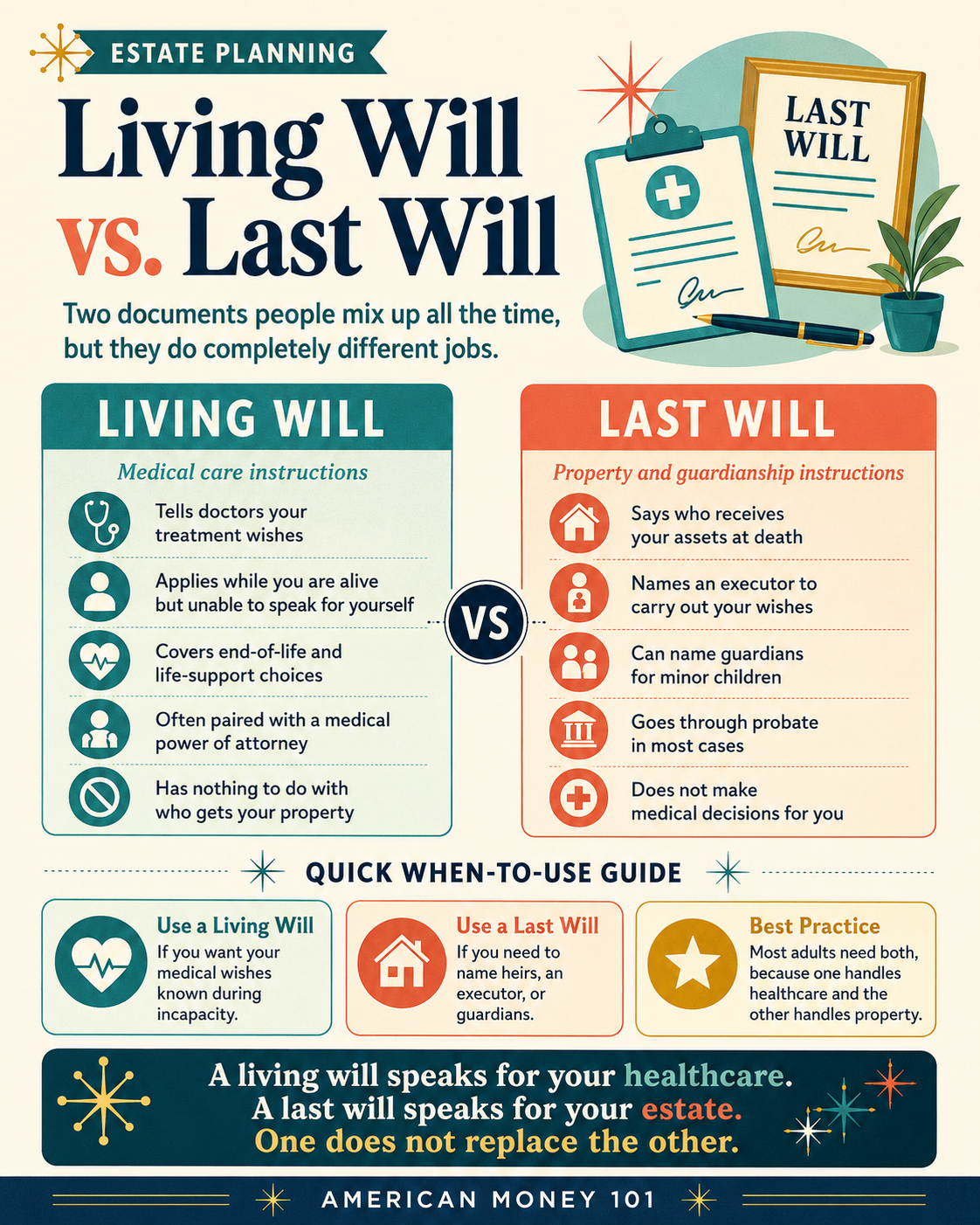
When you sit down to plan for the future, you will likely encounter two documents with very similar names: a living will and a last will. It is incredibly common to mix these two up, but they do completely different jobs. One speaks for your healthcare while you are still alive, and the other speaks for your estate after you have passed away. Understanding the difference between a living will and a last will is a foundational step in protecting yourself and your family.
What Is a Living Will?
A living will is a legal document that provides medical care instructions. It tells doctors and your loved ones exactly what your treatment wishes are if you are ever in a situation where you cannot speak for yourself. This document only applies while you are alive but incapacitated, such as being in a coma or facing a terminal illness where you cannot communicate.
Key features of a living will include:
- Tells doctors your treatment wishes: It outlines your preferences for medical interventions.
- Applies while you are alive but unable to speak for yourself: It only takes effect when you lose the capacity to communicate.
- Covers end-of-life and life-support choices: You can specify whether you want breathing tubes, feeding tubes, or other life-sustaining measures.
- Often paired with a medical power of attorney: A medical power of attorney names a specific person to make healthcare decisions for you, complementing the instructions in your living will.
- Has nothing to do with who gets your property: A living will strictly handles medical decisions.
What Is a Last Will?
A last will, formally known as a last will and testament, provides property and guardianship instructions. This is the document most people think of when they hear the word "will." It dictates what happens to your assets and who takes care of your dependents after you die. Unlike a living will, a last will only takes effect after your death.
Key features of a last will include:
- Says who receives your assets at death: You name beneficiaries for your property, money, and personal items.
- Names an executor to carry out your wishes: You choose a trusted person to manage your estate, pay debts, and distribute assets.
- Can name guardians for minor children: This is a crucial function for parents, ensuring their children are cared for by someone they choose.
- Goes through probate in most cases: A last will typically must be validated by a probate court before assets are distributed.
- Does not make medical decisions for you: A last will has no authority over your healthcare while you are alive.
Quick When-to-Use Guide
Knowing when to use each document helps clarify their distinct roles in your estate plan. You use a living will if you want your medical wishes known during incapacity. This ensures that your family is not burdened with making agonizing end-of-life decisions without knowing what you would have wanted. On the other hand, you use a last will if you need to name heirs, an executor, or guardians. If you die without a last will, state intestacy laws will determine who gets your property, which may not align with your wishes.
Why You Need Both
The best practice for most adults is to have both a living will and a last will. Because one handles healthcare and the other handles property, one does not replace the other. A living will speaks for your healthcare, ensuring you receive the medical treatment you desire (or avoid treatments you do not want) when you are vulnerable. A last will speaks for your estate, ensuring your loved ones are provided for and your assets are distributed according to your exact instructions. Together, they form the bedrock of a responsible estate plan.