When you finally start collecting Social Security, you might assume that money is yours to keep, free and clear. But for many retirees, that is not the case. Depending on your other sources of income, the federal government can tax a portion of your Social Security benefits. Understanding how the IRS determines this can help you plan your retirement income more effectively and avoid unpleasant surprises at tax time.
The Combined Income Formula
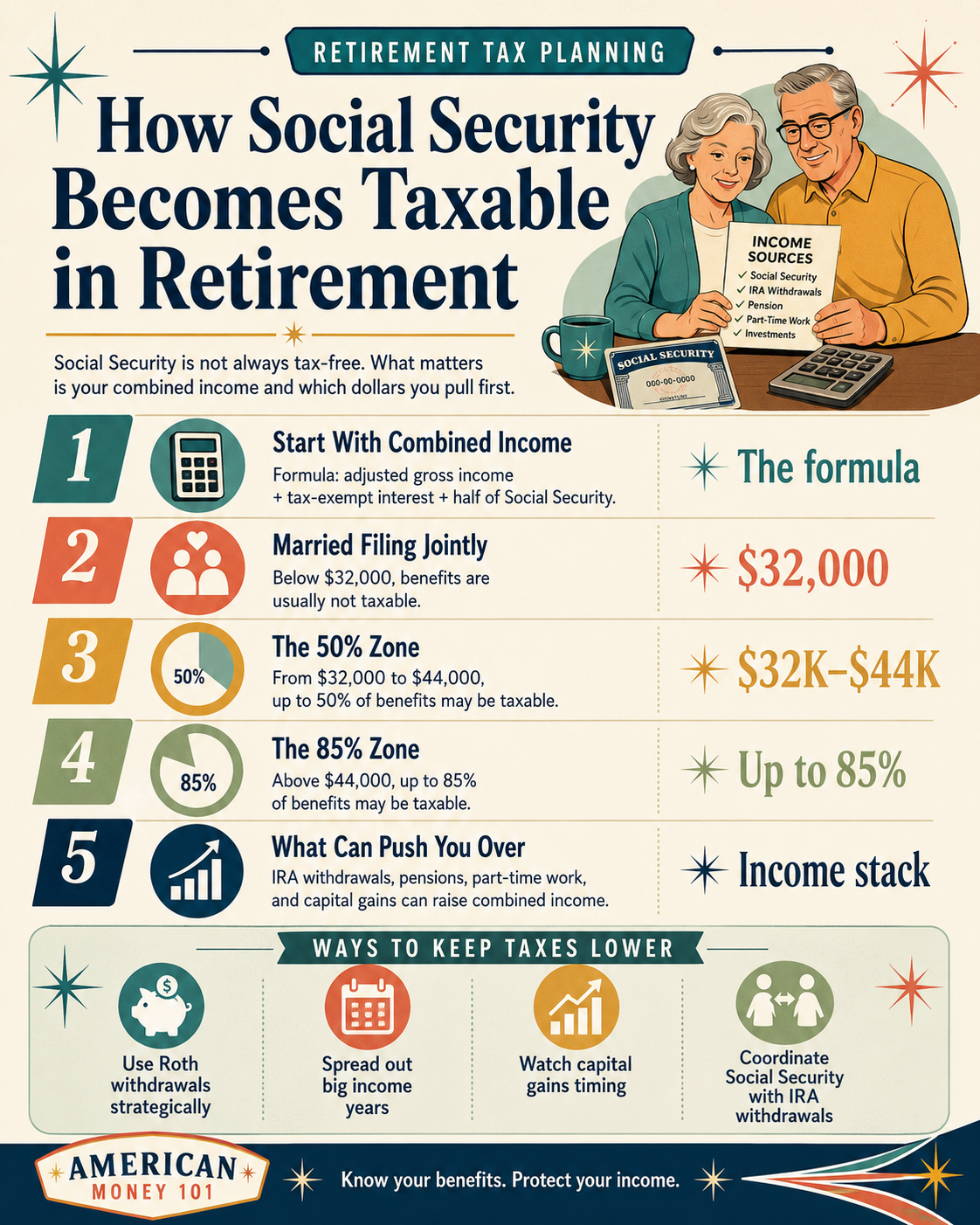
The IRS does not just look at your total income to decide if your Social Security is taxable. Instead, it uses a specific calculation called "combined income" (sometimes referred to as provisional income). To find your combined income, you add up three things:
- Your adjusted gross income (AGI), which includes things like wages, pension payments, and taxable withdrawals from traditional IRAs and 401(k)s.
- Any tax-exempt interest you earn, such as from municipal bonds.
- Half of your Social Security benefits for the year.
This formula is the starting point. The resulting number dictates whether you owe taxes on your benefits and, if so, how much of your benefits are subject to taxation.
The Thresholds for Married Couples Filing Jointly
The IRS has established specific income thresholds that determine the taxability of your benefits. These thresholds are not indexed for inflation, meaning they have remained the same for decades, causing more retirees to owe taxes on their benefits over time. For married couples filing jointly, the thresholds are broken down into three zones:
Below $32,000: Usually Not Taxable
If you and your spouse have a combined income of less than $32,000, you generally will not owe federal income tax on your Social Security benefits. This is the safe zone where your benefits remain entirely tax-free at the federal level.
The 50% Zone: $32,000 to $44,000
If your combined income falls between $32,000 and $44,000, up to 50% of your Social Security benefits may be subject to federal income tax. It is important to note that this does not mean you pay a 50% tax rate on your benefits. It means that up to half of your benefit amount is added to your taxable income, which is then taxed at your regular income tax rate.
The 85% Zone: Above $44,000
If your combined income exceeds $44,000, up to 85% of your Social Security benefits may be taxable. Again, this means that up to 85% of your benefit amount is included in your taxable income. No one pays taxes on more than 85% of their Social Security benefits, regardless of how high their income is.
What Can Push You Over the Edge
Because the combined income formula includes various income sources, several factors can push you over the thresholds and trigger taxes on your Social Security. Common income sources that increase your combined income include:
- IRA and 401(k) Withdrawals: Distributions from traditional, tax-deferred retirement accounts count toward your AGI.
- Pensions: Regular pension payments are generally taxable and increase your AGI.
- Part-Time Work: Any wages you earn from a job in retirement will add to your AGI.
- Investments: Capital gains, dividends, and even tax-exempt interest from municipal bonds are factored into the combined income calculation.
When planning your retirement income, you have to look at the whole picture. A large withdrawal from a traditional IRA to pay for a home repair, for example, could spike your combined income for that year, causing a larger portion of your Social Security to be taxed.
Ways to Keep Taxes Lower
While you cannot change the IRS rules, you can make strategic decisions about how and when you draw your retirement income to manage your combined income and potentially lower your tax bill. Here are a few strategies to consider:
- Use Roth Withdrawals Strategically: Qualified withdrawals from a Roth IRA or Roth 401(k) are tax-free and do not count toward your AGI or your combined income. Pulling from Roth accounts instead of traditional accounts can help keep your combined income below the taxation thresholds.
- Spread Out Big Income Years: If you need a large sum of money, try to spread the withdrawals over multiple tax years rather than taking a lump sum all at once. This can prevent a massive spike in your combined income in a single year.
- Watch Capital Gains Timing: Be mindful of when you sell investments that will generate capital gains. Timing these sales carefully can help you manage your AGI.
- Coordinate Social Security with IRA Withdrawals: Work on a withdrawal strategy that balances your taxable income sources with your Social Security benefits. Sometimes, delaying Social Security while drawing down traditional IRA balances can reduce your future required minimum distributions (RMDs) and lower your long-term tax burden.
Taxes in retirement can be complex, and the rules surrounding Social Security taxation are a prime example. By understanding how combined income works and the thresholds that apply to you, you can make more informed decisions about your retirement income strategy.