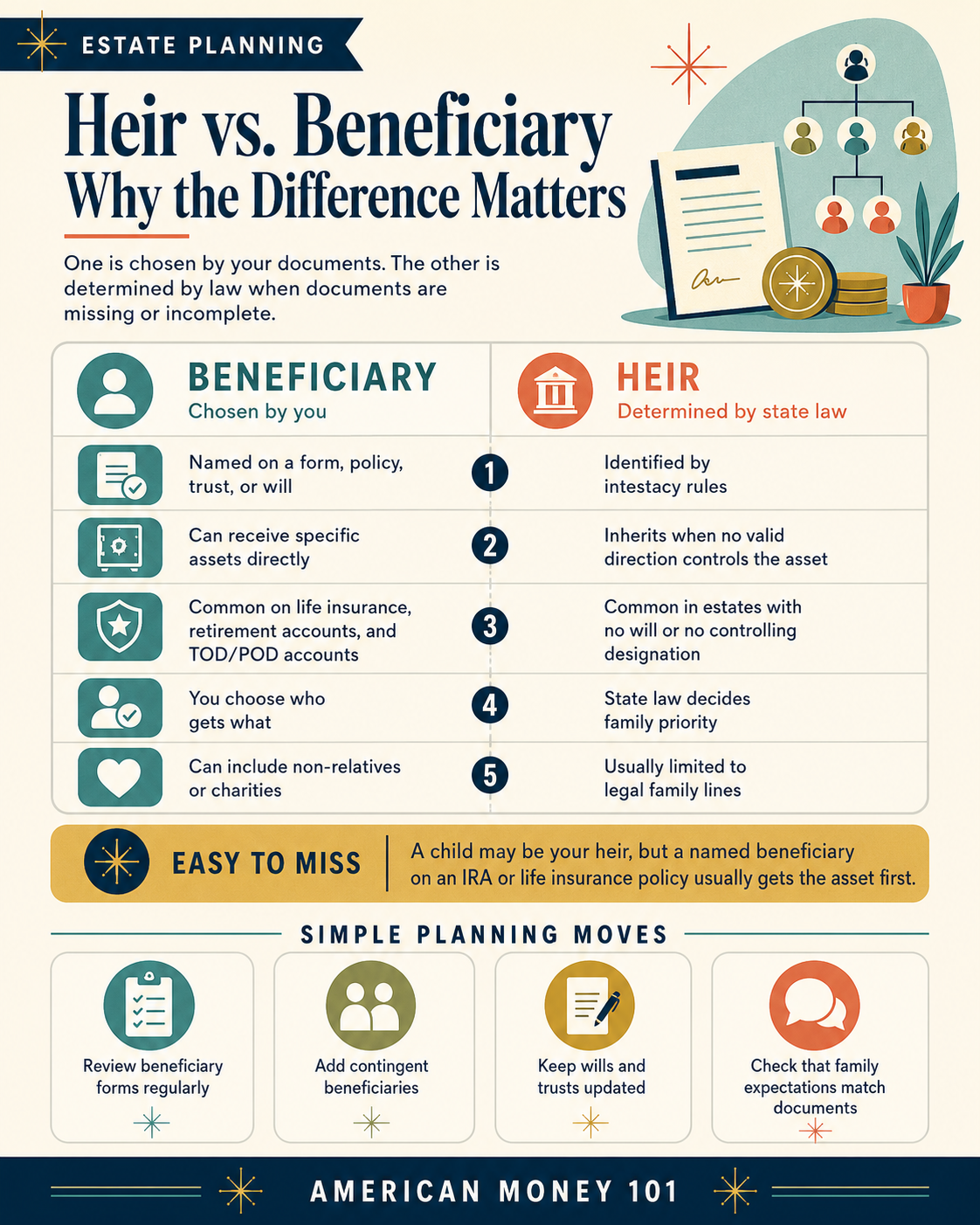
When you sit down to think about what happens to your money and property after you pass away, you will likely encounter two terms that sound similar but function very differently: heir and beneficiary. The exact question this infographic answers is: What is the difference between an heir and a beneficiary, and why does that difference matter for your estate planning? Understanding this distinction is essential because one is chosen by your documents, while the other is determined by law when those documents are missing or incomplete.
What is a Beneficiary?
A beneficiary is someone you specifically choose to receive your assets. You name them on a form, policy, trust, or will. Because you are making the choice, you have complete control over who gets what. Beneficiaries can receive specific assets directly, and they do not have to be related to you. You can name friends, unmarried partners, or even charities as beneficiaries.
You will commonly see beneficiary designations on:
- Life insurance policies
- Retirement accounts (like IRAs and 401(k)s)
- Transfer on Death (TOD) or Payable on Death (POD) bank and investment accounts
When you name a beneficiary on these types of accounts, the asset typically passes directly to them, bypassing the probate process. This makes it a very efficient way to transfer wealth.
What is an Heir?
An heir, on the other hand, is determined by state law. Heirs are identified by intestacy rules, which are the laws that dictate who inherits your property if you die without a valid will or if an asset has no controlling designation. Essentially, if you do not make a choice, the state makes it for you.
State law decides the family priority for inheritance, usually starting with a surviving spouse and children, then moving to parents, siblings, and more distant relatives. Because the state is following a strict legal formula, heirs are usually limited to legal family lines. An unmarried partner or a close friend would not be considered an heir under intestacy laws, no matter how close your relationship was.
The "Easy to Miss" Rule: Beneficiaries Usually Win
One of the most critical things to understand about estate planning is how these two concepts interact. A common misconception is that a will controls everything. However, a named beneficiary on an account like an IRA or a life insurance policy usually gets the asset first, regardless of what your will says or who your legal heirs are.
For example, if your will states that all your assets should be divided equally among your three children, but your life insurance policy names only your oldest child as the sole beneficiary, that oldest child will receive the entire life insurance payout. The beneficiary designation overrides the will. This is why it is so easy to make a mistake if you are not paying attention to all your documents.
Simple Planning Moves to Protect Your Legacy
To ensure your assets go exactly where you want them to, you need to take proactive steps. Relying on state law to determine your heirs means giving up control. Here are some simple planning moves you can make today:
- Review beneficiary forms regularly: Life changes. Marriages, divorces, births, and deaths can all impact who you want to receive your assets. Make it a habit to check the beneficiaries on your retirement accounts, life insurance policies, and bank accounts annually or after any major life event.
- Add contingent beneficiaries: A contingent beneficiary is a backup. If your primary beneficiary passes away before you do, the asset will go to the contingent beneficiary. This prevents the asset from falling back into your estate and being subject to intestacy laws.
- Keep wills and trusts updated: Your will and any trusts you have created should accurately reflect your current wishes. If you buy new property, sell a business, or change your mind about who should inherit, update your documents.
- Check that family expectations match documents: Open communication can prevent a lot of heartache and legal battles later. Make sure your family understands your wishes and that those wishes are clearly reflected in your legally binding documents.
By understanding the difference between an heir and a beneficiary, and by keeping your designations and documents up to date, you can maintain control over your legacy and provide peace of mind for yourself and your loved ones.