When you sit down to map out your estate plan, you are bound to run into two titles that sound incredibly similar: executor and trustee. Both roles involve a high level of responsibility, and both require someone you trust to manage your assets. But who actually controls what? The short answer is that they handle very different parts of an estate plan. Understanding the distinction is crucial for ensuring your wishes are carried out smoothly and your loved ones are not left untangling a legal mess.
What Does an Executor Do?
An executor is the person you name in your last will and testament to handle your affairs after you pass away. Their primary job is to manage your probate estate. Probate is the legal process of validating your will, paying off your final debts, and distributing your remaining property to your heirs.
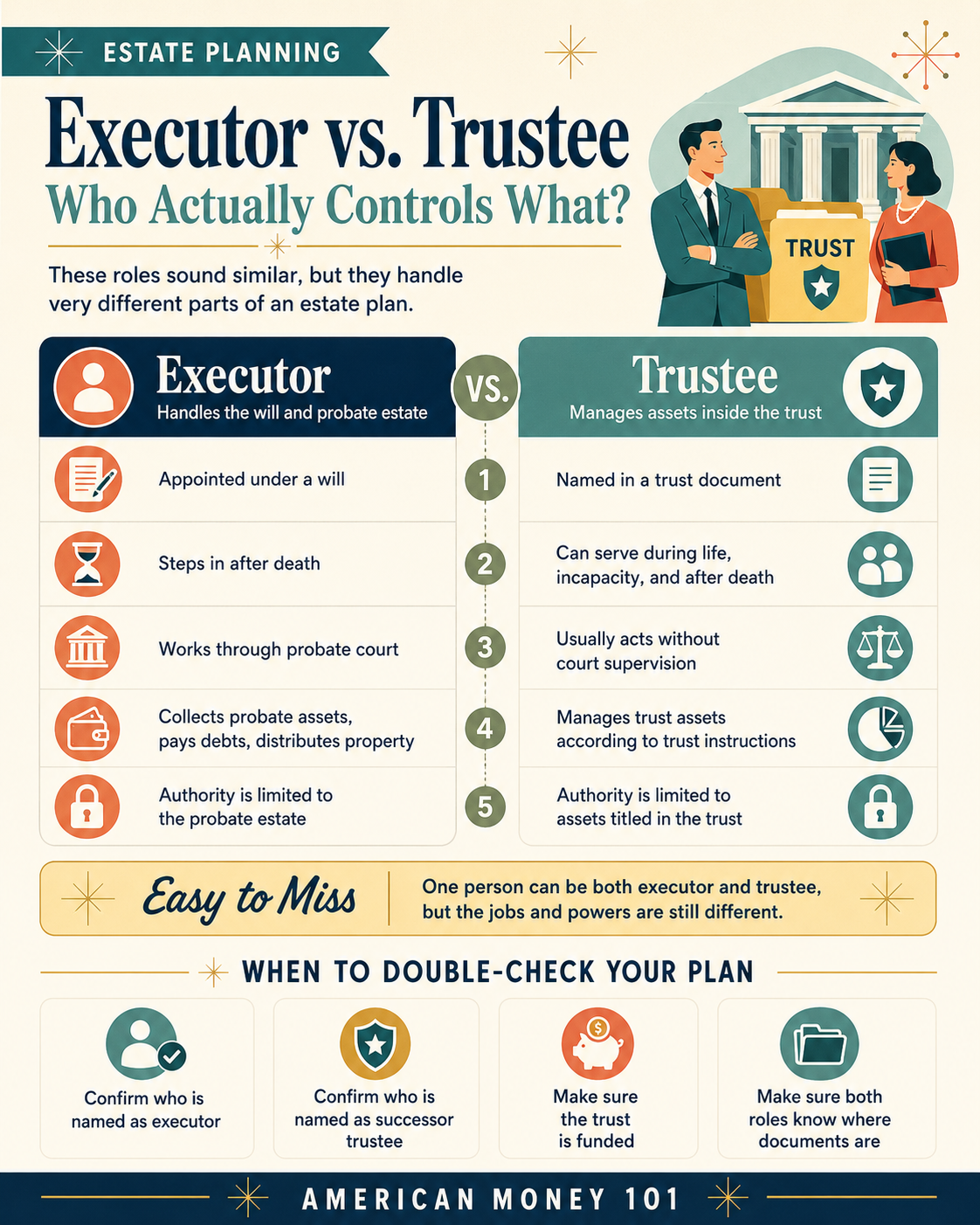
- Appointed under a will: You name your executor in your will. If you die without a will, a probate court will appoint an administrator to serve this function.
- Steps in after death: An executor has no power while you are alive. Their authority only begins after you pass away and the probate court officially appoints them.
- Works through probate court: The executor's actions are supervised by the probate court. They must file the will, submit an inventory of assets, and get court approval to distribute property.
- Collects probate assets, pays debts, distributes property: The executor gathers the assets you owned in your individual name, pays your final bills and taxes, and hands out what is left according to your will.
- Authority is limited to the probate estate: An executor only has control over assets that go through probate. They do not control assets held in a trust, retirement accounts with named beneficiaries, or life insurance payouts.
What Does a Trustee Do?
A trustee is the person or institution you name in a trust document to manage the assets held inside that trust. A trust is a separate legal entity that holds property for the benefit of your chosen beneficiaries. Because the trust owns the assets, those assets generally avoid the probate process.
- Named in a trust document: You appoint a trustee when you create the trust. You can also name successor trustees to take over if the primary trustee cannot serve.
- Can serve during life, incapacity, and after death: If you create a revocable living trust, you are usually the initial trustee. If you become incapacitated, your successor trustee can step in immediately to manage your finances. After your death, the trustee continues to manage or distribute the trust assets.
- Usually acts without court supervision: Unlike an executor, a trustee generally does not have to go through probate court. They follow the instructions laid out in the trust document privately.
- Manages trust assets according to trust instructions: The trustee's job is to invest the trust property prudently, file tax returns for the trust, and distribute funds to the beneficiaries exactly as you directed.
- Authority is limited to assets titled in the trust: A trustee only controls property that has been legally transferred into the trust's name. They have no power over your probate assets.
Can One Person Be Both?
Yes. It is very common to name the same trusted individual to serve as both the executor of your will and the successor trustee of your living trust. However, it is important to remember that even if one person holds both titles, the jobs and powers are still different. They will wear their "executor hat" when dealing with the probate court and your individual assets, and their "trustee hat" when managing the trust property.
When to Double-Check Your Plan
Setting up an estate plan is not a "set it and forget it" task. Life changes, and your plan needs to keep up. Here are a few things you should regularly review to make sure your plan works when it is needed most.
- Confirm who is named as executor: Make sure the person you named is still willing and able to serve. It is also smart to name an alternate executor just in case.
- Confirm who is named as successor trustee: Just like your executor, verify that your successor trustee is still the right person for the job. Managing a trust can be a long-term commitment.
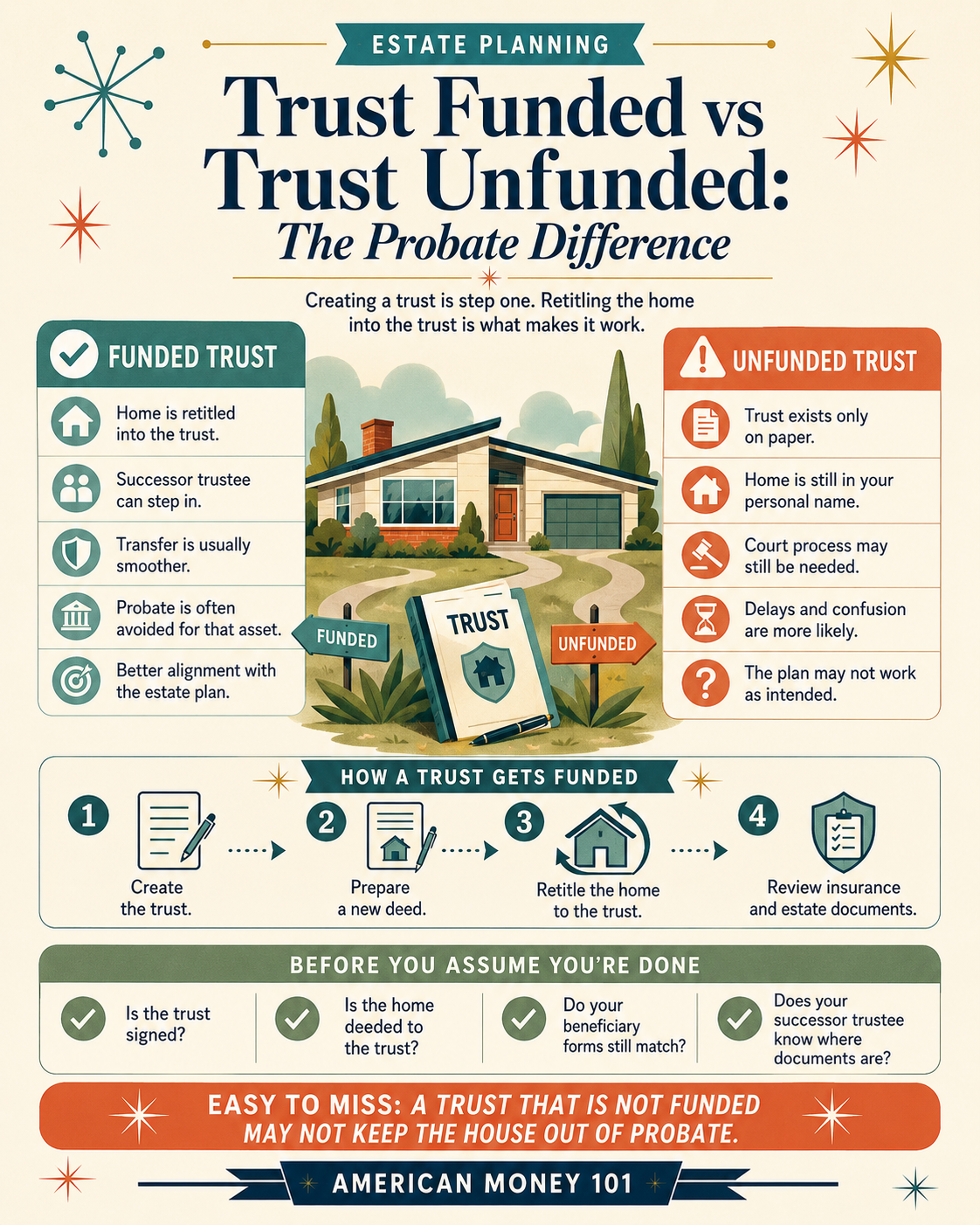
- Make sure the trust is funded: A trust only controls the assets you put into it. If you create a trust but never retitle your house or bank accounts into the trust's name, those assets will have to go through probate, defeating the purpose of the trust.
- Make sure both roles know where documents are: Your executor and trustee cannot do their jobs if they cannot find your will, trust documents, and financial records. Tell them where you keep your important papers and how to access them.
Choosing the right people for these roles is a big decision. Take the time to understand the responsibilities involved, talk to the people you want to appoint, and consult with an estate planning attorney to ensure your wishes are clearly documented and legally sound.